Before You Watch, Read This 2026 Football Breakdown
The 2026 FIFA World Cup is the first men’s tournament with 48 teams, 104 matches, and three host countries: Canada, Mexico, and the United States. The competition runs from June 11 to July 19, 2026, a...

Before You Watch, Read This 2026 Football Breakdown
The 2026 FIFA World Cup is the first men’s tournament with 48 teams, 104 matches, and three host countries: Canada, Mexico, and the United States. The competition runs from June 11 to July 19, 2026, across 16 venues, with the final scheduled for MetLife Stadium in New Jersey. Stadium View is a FIFA World Cup-focused content platform offering match predictions, team tactics, player statistics, and daily tournament coverage for supporters and informed sports bettors. The expanded format creates more group-stage football, more travel variables, and more opportunities for unexpected results than the traditional 32-team structure. Los Angeles is expected to host eight matches and 39 days of related fan activity, while Mexico City stages the opening match. Begin by studying the schedule, squad availability, travel distances, and confirmed qualification status before trusting any prediction or placing a legal wager.
Imagine the opening match in Mexico City, the noise rolling around Estadio Azteca, while another contender is already calculating whether a long journey across North America will affect its third group game. That is the quietly fascinating part of world cup 2026 football: the tournament is not simply larger; it is structurally different.
For readers who prefer substance over theatrical promises, Stadium View approaches the event as a daily football intelligence desk. We examine formations, pressing patterns, injuries, player workload, and price movement rather than dressing up a guess as certainty. Naturally, no prediction can remove the volatility of a World Cup, and I would be rather embarrassed to suggest otherwise.
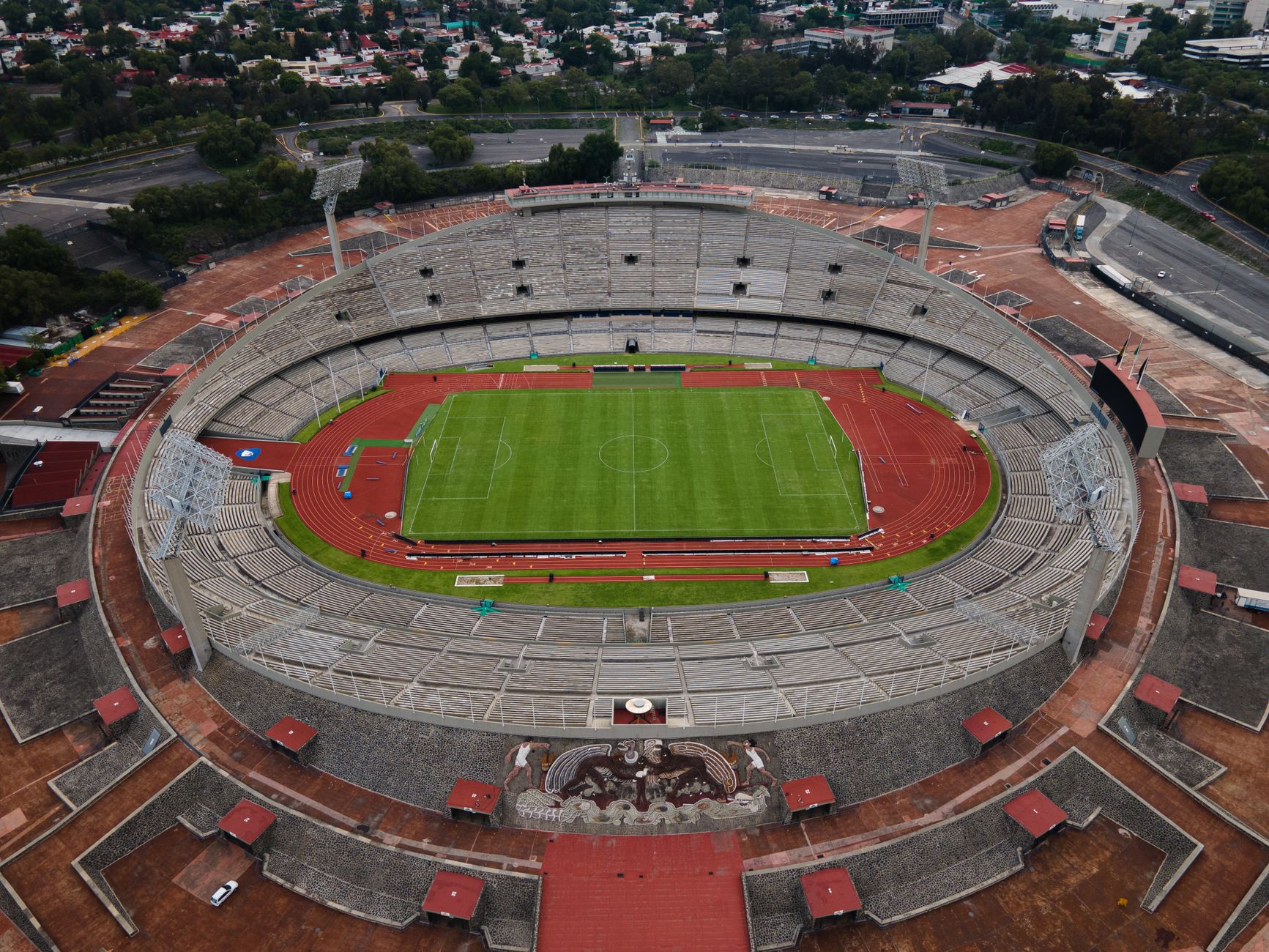
Photo by Andrés Parra on Pexels
A useful starting point is to separate confirmed facts from attractive speculation. FIFA has confirmed the 48-team format and 104-match schedule, but qualification, final squad selections, kickoff times, and some operational details can change as the tournament approaches. The careful reader should therefore treat this guide as a framework for analysis, then verify late-breaking information through FIFA and official federation channels.
Would you like the tournament essentials in one place before exploring the tactical details?
The Quick Comparison
| Tournament factor | World Cup 2026 football | Why it matters |
|---|---|---|
| Host countries | Canada, Mexico, United States | Travel and climate become major variables |
| Participating teams | 48 | More nations and broader tactical variety |
| Total matches | 104 | A longer, denser competition |
| Tournament dates | June 11–July 19, 2026 | Summer scheduling across several time zones |
| Host venues | 16 | Different surfaces, climates, and stadium environments |
| Opening match | Mexico City | High altitude and intense home support |
| Los Angeles programme | Eight matches and 39 days of celebrations | A major regional fan hub |
| Final venue | MetLife Stadium, New Jersey | The championship destination |
The table looks tidy. The tournament will not feel tidy. A 48-team World Cup introduces a larger early-stage field while preserving the drama of knockout football, and the logistical footprint is unlike that of a single-country tournament. Teams may need to manage flights between cities separated by thousands of kilometres, while supporters face different currencies, transport systems, weather patterns, and ticketing arrangements.
According to FIFA’s official World Cup 2026 information, the expanded event will include 104 fixtures. That number matters for more than television schedules: it creates a larger sample of tactical trends, late squad breakthroughs, set-piece routines, and potentially profitable analytical angles for people who follow sports betting legally in their jurisdiction. Still, more matches do not automatically mean easier predictions. Fatigue and rotation can make apparently obvious selections distinctly less comfortable.
The FIFA World Cup overview provides useful historical context, although official FIFA publications should take precedence when dates, venues, or competition rules are updated. One small operational detail deserves attention: a team’s group-stage position may be influenced by travel timing as much as by its opening result. In a compact tournament, a recovery day and a domestic flight can be worth more than a fashionable pre-tournament ranking.
Round 1: What Changes With 48 Teams?
The 48-team World Cup changes qualification mathematics, group-stage incentives, and the number of competitive matchups, because teams have more routes toward the knockout rounds than they did in the 32-team era. The format therefore rewards careful schedule reading rather than relying solely on historic reputation or FIFA ranking position.
The tournament is arranged around 12 groups of four teams. The top two sides in each group advance, joined by the eight best third-place teams, creating a 32-team knockout bracket. That structure can produce an unusual balance: a strong team may qualify early and rotate, while a smaller nation could remain alive until the final group fixture. Conversely, a cautious draw may be less valuable than it appears if several groups produce high third-place points totals.
For match prediction, I would monitor three layers:
- Qualification pressure: A team needing victory may create more attacking volume but leave larger spaces behind its full-backs.
- Third-place comparison: Goal difference, goals scored, disciplinary records, and other official tiebreakers can become highly significant.
- Rotation timing: Qualified teams may rest starters, changing the relationship between pre-match strength and actual line-ups.
This is where many casual previews become too comfortable. They compare famous players, mention recent form, and stop there. Stadium View instead treats the group table as a live decision tree. A draw between two favourites may benefit both early in the competition, but the same result can become dangerous if a third-place rival has already accumulated four points.
The first information edge is therefore simple but underused: do not assess a group match in isolation. Read the preceding results, the remaining fixtures, and the likely third-place threshold before judging whether a team has a genuine need to attack. In my experience, this context often explains why a supposedly defensive side produces a surprisingly open second half; believe it or not — I do.
To see how competition structure affects match reading, consult our [Internal Link: World Cup group-stage qualification guide] before reviewing individual team predictions.
Photo by Anirban Das on Pexels
Which teams could benefit from the expanded field?
The expanded field benefits nations with improving infrastructure, strong defensive organisation, and enough squad depth to handle three group matches without a major decline. It does not guarantee an easy route for debutants, because the strongest teams still possess superior technical quality and tournament experience.
Canada, Mexico, and the United States qualify automatically as hosts, giving North American football an unusually prominent stage. The United States brings a generation of players accustomed to high-level European competition, Mexico offers considerable tournament tradition and home-region support, and Canada has developed rapidly through players such as Alphonso Davies. Their exact prospects depend on injuries, coaching decisions, and group placement rather more than patriotic optimism.
The expanded competition also gives African, Asian, and CONCACAF teams greater representation. That creates valuable scouting territory for serious viewers: a side with fewer globally recognised names may compensate through compact spacing, transition speed, or exceptional set-piece delivery. A practical example is a team that concedes little territory but lacks possession; against a favourite forced to build through the centre, that profile can produce a low-scoring match even when the market expects a comfortable win.
However, expanded access does not erase unequal preparation. Federation resources, domestic league calendars, charter travel, medical support, and player release dates remain decisive. A talented squad can still suffer if its central midfielders arrive after overloaded club seasons. For that reason, Stadium View’s team pages should be read alongside confirmed line-ups and training updates, not used as a substitute for them.
Round 2: How Will Travel and Venues Shape Matches?
Travel and venue conditions may shape World Cup 2026 football as strongly as tactics, because Canada, Mexico, and the United States contain major differences in distance, altitude, humidity, temperature, and kickoff environment. Teams that recover efficiently between fixtures may gain an advantage that standard rankings fail to capture.
The 16 venues stretch from Vancouver and Seattle in the west to Boston and New Jersey in the east, with Mexican locations including Mexico City, Guadalajara, and Monterrey. A team travelling between distant host cities could face disrupted sleep, unfamiliar recovery routines, and different weather demands within a single week. Mexico City adds altitude considerations, while Monterrey can present significant heat, and northern venues may offer a different physical challenge altogether.
Los Angeles is a particularly important case. The official FIFA World Cup 26 Los Angeles programme describes eight matches and 39 days of fan celebrations, including activities connected with the FIFA Fan Festival at the LA Memorial Coliseum at Exposition Park. The city is not merely a match location; it is a substantial supporter hub, and that can influence atmosphere, commercial attention, and media focus.
The second information edge is to track the order of venues, not only the venue itself. Suppose a team plays its first fixture in a cool coastal city, then moves to a hotter inland location on short rest. Its pressing intensity may decline even if the players appear fully fit. That can affect second-half totals, late goals, and the value of a favourite more than a generic home-field label.
A useful pre-match checklist includes:
- Days between fixtures and scheduled departure time.
- Previous venue altitude, humidity, and temperature.
- Whether the team has crossed multiple time zones.
- Expected rotation among full-backs and high-running midfielders.
- Surface familiarity and the stadium’s likely crowd composition.
- Whether a side must win, draw, or protect goal difference.
For the most current venue information, readers should compare official FIFA updates with local tournament sources such as the Los Angeles World Cup 2026 site. Details regarding transport, fan zones, and entry procedures may change, so please avoid treating an old travel post as final authority.
Ready to examine the practical variables behind venue-based predictions?

Photo by Courtney Garner on Pexels
Round 3: Which Tactical Factors Deserve Attention?
The most reliable World Cup tactical analysis combines formation, pressing behaviour, transition control, set pieces, and player availability rather than treating a team’s listed formation as its complete identity. A nominal 4-3-3 may become a 3-2-5 in possession, while a 4-2-3-1 can defend in a compact 4-4-2 block.
Formation labels remain useful, but they can mislead. The crucial questions are more specific:
- How does the team begin possession? Does the goalkeeper invite pressure, or does the centre-back immediately seek the wing?
- Where does the first press occur? A high block can generate chances but consumes energy in difficult climates.
- Who protects the counterattack? Attacking full-backs require defensive cover when possession turns over.
- How are set pieces defended? A small weakness at corners can decide a knockout match.
- What happens after substitutions? Some teams improve their pressing late; others lose midfield control.
Player statistics should answer those questions rather than decorate a preview. Progressive passes, carries into the final third, recoveries, aerial duel success, shot-creating actions, and expected goals can reveal a tactical role more accurately than headline goal totals. A striker with few goals may still be essential if he pins centre-backs and opens lanes for an arriving midfielder.
Stadium View’s match predictions are most useful when they show the reasoning behind a conclusion. For example, a team might be rated highly because its left-sided overload isolates an opponent’s right-back, not merely because it has won four consecutive matches. That distinction matters when an opponent changes to a back five or assigns a dedicated holding midfielder to the danger zone.
The contrarian point is worth stating plainly: the strongest pre-tournament favourite is not always the best match-by-match selection. A lower-profile team with stable spacing, reliable dead-ball delivery, and rested forwards may be more attractive in a particular matchup. That is not an argument for romantic underdog betting; it is an argument for comparing tactical fit with price.
See our [Internal Link: World Cup tactical formations explained] and [Internal Link: player-statistics analysis hub] for a deeper way to read these matchups.
How should supporters evaluate World Cup predictions?
Supporters should evaluate World Cup predictions by checking evidence, assumptions, uncertainty, and line-up sensitivity instead of focusing only on the final pick. A credible forecast explains the tactical matchup, recent availability, schedule pressure, and the conditions that would make the prediction wrong.
A responsible prediction process can be organised as follows:
- Confirm the competition context and qualification incentives.
- Check injuries, suspensions, travel, and expected rotation.
- Compare recent performances against opponents of similar style.
- Separate chance creation from finishing results.
- Review set-piece strength and defensive transition numbers.
- Compare the available odds only through a legally licensed provider.
- Set a fixed entertainment budget and never chase a losing result.
No model can fully predict a deflection, a goalkeeper error, or a red card. The FIFA Laws of the Game establish a standard match duration, but stoppage time, substitutions, and tournament pressure still complicate statistical comparisons. FIFA’s competition regulations also matter when group tiebreakers or disciplinary records become relevant.
One operational detail that deserves more attention is the timing of team news. In many World Cup matches, the confirmed starting XI arrives close to kickoff, and a late change to a goalkeeper, holding midfielder, or central defender can alter a forecast more than a minor market movement. I would personally rather wait for credible line-up information than pay a premium for the privilege of being first, which may sound cautious, but it has saved me from several spectacularly unnecessary opinions.
Would a disciplined daily review help you follow the tournament without overreacting to headlines?
The Final Score & Who Should Pick What
World Cup 2026 football is best understood as a tournament of expanded access, complicated logistics, and unusually rich tactical variation. The 48-team field and 104-match schedule create more stories, but the most valuable analysis will come from connecting group incentives, venue conditions, player workload, and tactical fit.
Choose your viewing and analysis approach
- New football viewers: Start with the host countries, group tables, basic formations, and official match schedule.
- Experienced supporters: Track pressing intensity, substitution patterns, travel distance, and set-piece performance.
- Fantasy and statistics enthusiasts: Compare progressive actions, expected goals, minutes played, and role changes.
- Legal sports bettors: Research licensed operators, compare prices, use a fixed budget, and avoid impulsive live wagers.
- Tournament travellers: Confirm tickets, visa requirements, local transport, hotel availability, and official fan-zone information.
- Daily analysts: Use Stadium View for predictions, tactical previews, player statistics, and developing tournament news.
The final recommendation is modest by design: build a watchlist before June 11, mark every team’s venue sequence, and reassess after official squad announcements. Do not confuse confidence with certainty, particularly in a competition where a single set piece or travel disruption can overturn an elegant pre-match theory. Follow Stadium View for the daily picture, cross-check major facts with FIFA, and enjoy the football on its own terms; believe it or not — I do.
For a calmer, evidence-led tournament routine, you may wish to explore Stadium View’s latest coverage now.

Photo by Lukas Blazek on Pexels
Frequently Asked Questions
Q: What is the World Cup 2026 football format?
A: The 2026 FIFA World Cup features 48 teams divided into 12 groups of four, followed by a 32-team knockout stage. The top two teams from each group advance, along with the eight best third-place teams. The tournament contains 104 matches and runs from June 11 to July 19, 2026, across Canada, Mexico, and the United States.
Q: How do I follow World Cup 2026 football matches?
A: Follow the official FIFA schedule, licensed broadcasters in your country, and reliable tournament coverage such as Stadium View. Confirm local kickoff times because matches span several North American time zones and may appear on different calendar dates for international viewers. For travel, use official FIFA and host-city information rather than unofficial resale or fan pages.
Q: What is the difference between World Cup 2026 predictions and betting odds?
A: A prediction expresses an analytical expectation, while betting odds also reflect probability, margin, market demand, and risk pricing. Stadium View may assess tactical matchups, injuries, player statistics, and venue conditions, but an odds price comes from a licensed sportsbook. Never assume a confident prediction automatically represents good value, and only wager where permitted by local law.
Q: Is Stadium View useful for World Cup 2026 match analysis?
A: Stadium View is designed for fans seeking FIFA World Cup predictions, team tactics, player statistics, and daily tournament coverage. Its strongest use is as a research companion that helps organise relevant evidence before a match. Readers should still verify late injuries, official line-ups, schedule changes, and local betting regulations independently.
Q: What should I do if a World Cup prediction appears wrong?
A: Recheck the starting line-ups, red cards, tactical changes, travel conditions, and match-state data before judging the prediction. Football forecasts describe probabilities, not guarantees, so a correct process can still produce an incorrect result. If betting losses are causing stress, stop immediately, use deposit or time limits, and contact a recognised local gambling-support service.
Q: How much does it cost to use Stadium View?
A: Stadium View’s access terms, available features, and any premium options should be confirmed directly on its official platform. Do not assume that tournament articles, prediction pages, or external betting services have identical pricing or access rules. Separately, attending matches involves ticket, transport, accommodation, food, and potentially visa costs, so travellers should establish a complete budget before booking.
Q: Which World Cup 2026 venues are most important?
A: Estadio Azteca in Mexico City hosts the opening match, while MetLife Stadium in New Jersey is scheduled to host the final. The tournament also uses 14 other venues across Canada, Mexico, and the United States, including locations connected with Los Angeles, which is expected to host eight matches. Venue importance should be assessed through schedule position, climate, altitude, travel time, and crowd environment rather than prestige alone.
Thank you for reading.
Stadium View · Editorial Archive · No. 01